
Respiratory protection
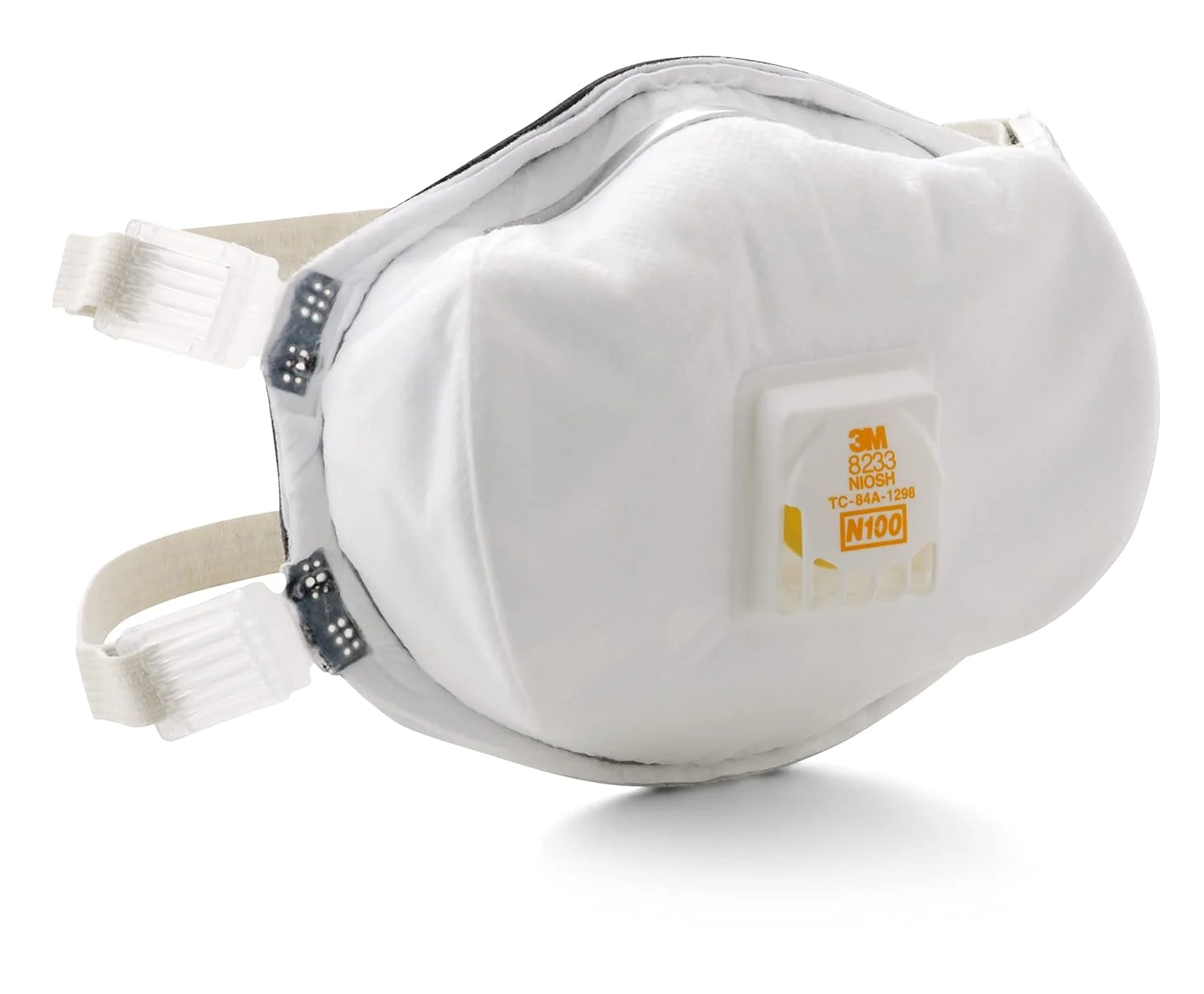
3M 8233 N100 Particulate Respirator
N100-rated respirator filtering 99.97% of airborne particles. Recommended for extended cleanup work or heavily contaminated spaces where hantavirus exposure risk is elevated.

Hantavirus answers covering symptoms, transmission, prevention, diagnosis, treatment and the current MV Hondius outbreak. Sourced from CDC, WHO, ECDC, and RKI guidance.
What hantavirus is, where it comes from, and how common it is.
Hantavirus is a group of RNA viruses (genus Orthohantavirus, family Hantaviridae) carried by rodents. Different species cause two main human diseases: hantavirus pulmonary syndrome (HPS) in the Americas and hemorrhagic fever with renal syndrome (HFRS) in Europe and Asia.
HPS is a severe respiratory illness caused by New World hantaviruses, most commonly Sin Nombre virus in North America and Andes virus in South America. The disease causes fluid to leak into the lungs, leading to severe shortness of breath. Case fatality rates are around 38 percent in the United States according to CDC data.
The umbrella term covers two clinical syndromes. HPS attacks the lungs and is found in the Americas. HFRS attacks the kidneys and circulatory system and is found in Europe and Asia. Severity ranges from mild flu-like illness to life-threatening organ failure depending on the virus species.
Hantavirus is uncommon in humans relative to its rodent reservoirs. The United States reports roughly 30 to 50 HPS cases per year (CDC). Europe records several thousand HFRS cases annually, mostly mild Puumala virus infections in Scandinavia, Germany, and Russia. Asia reports tens of thousands of HFRS cases per year, concentrated in China and Korea.
Globally hantaviruses cause an estimated 150,000 to 200,000 hospitalisations per year, the vast majority HFRS cases in Asia. HPS in the Americas remains rare with a few hundred annual cases. Subclinical infections are likely far more common than reported cases suggest.
Most experts consider a hantavirus pandemic unlikely. The vast majority of hantaviruses do not transmit between humans, which is the prerequisite for pandemic spread. The exception is Andes virus, which has documented person-to-person transmission. Historically these events stayed within southern Argentina and Chile, but the 2026 MV Hondius cruise ship cluster shows that infected travellers can carry the virus far from the natural rodent reservoir. WHO and ECDC are actively investigating that situation.
What hantavirus infection looks like, when symptoms appear, and how serious they get.
Early symptoms appear 1 to 8 weeks after exposure and include fever, severe muscle aches in the thighs, hips, back, and shoulders, fatigue, headache, dizziness, chills, and gastrointestinal complaints (nausea, vomiting, diarrhea, abdominal pain). After 4 to 10 days, severe symptoms develop: shortness of breath and a feeling of tightness in the chest as the lungs fill with fluid (HPS), or kidney pain, low urine output, and bleeding tendencies (HFRS).
The initial or prodromal phase is indistinguishable from many viral infections: high fever (often 38 to 40 °C), pronounced muscle aches, fatigue, and headache. Gastrointestinal symptoms are common. The hallmark of hantavirus is the timing: someone with rodent exposure who develops these symptoms 1 to 5 weeks later should mention the exposure to a clinician.
No. Symptoms do not appear immediately after exposure. The incubation period is typically 1 to 8 weeks, with an average of 2 to 4 weeks. Someone exposed during cleanup of a rodent-infested space may not feel ill for many days afterward.
Severity depends on the virus species. Puumala virus in Europe usually causes mild kidney symptoms (nephropathia epidemica) with full recovery. Hantaan virus in Asia causes classic HFRS with up to 12 percent mortality. Sin Nombre and Andes viruses in the Americas cause HPS with mortality around 38 percent. All forms can progress quickly once severe symptoms begin, so early medical attention matters.
The acute illness typically lasts 1 to 3 weeks if the patient survives the cardiopulmonary or critical phase. Recovery from severe disease can take weeks to months, with persistent fatigue, reduced exercise capacity, and impaired kidney function in some HFRS cases. Mild Puumala infections usually resolve within 2 weeks.
Hantavirus is an enveloped RNA virus and is relatively fragile outside its host. In dried rodent droppings or urine at room temperature, infectious virus can persist for 2 to 3 days. In cooler, humid conditions it may last longer. UV light, heat, soap, and common disinfectants like a 1:10 bleach solution inactivate it quickly.
The incubation period ranges from 1 week to 8 weeks. Most people develop symptoms between 14 and 28 days after exposure. Anyone with possible rodent exposure who develops fever and muscle aches within this window should contact a clinician and mention the exposure.
Common laboratory findings include a low platelet count (thrombocytopenia), elevated white blood cells with immature forms (left shift), elevated hematocrit due to fluid leaking out of blood vessels (in HPS), elevated creatinine indicating kidney involvement (in HFRS), and elevated lactate. These are nonspecific but in combination with rodent exposure history they support clinical suspicion. Final diagnosis requires serology or PCR.
N100-rated respirator filtering 99.97% of airborne particles. Recommended for extended cleanup work or heavily contaminated spaces where hantavirus exposure risk is elevated.
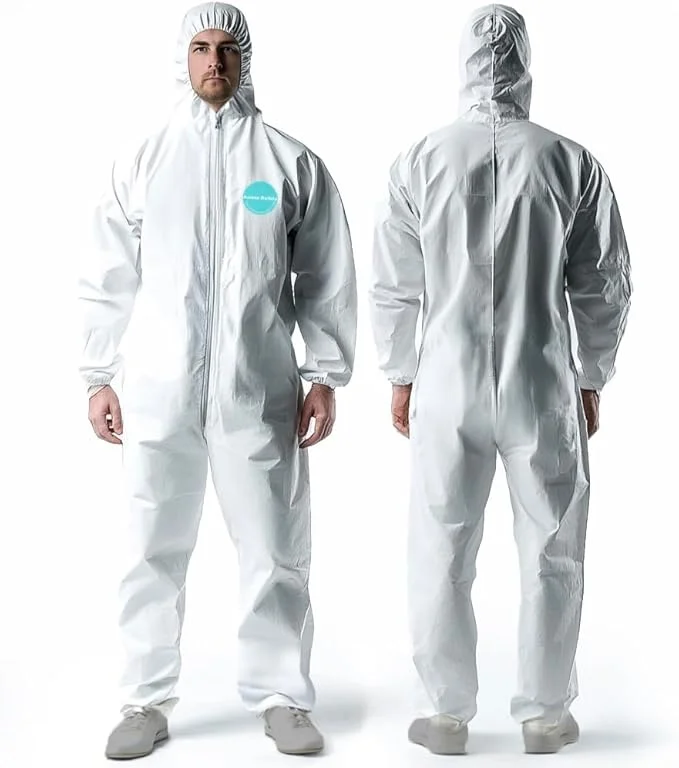
Type 5/6 microporous full-body coverall with attached hood. Provides barrier protection against dry particles and light liquid splashes during hantavirus cleanup. Dispose after each use.
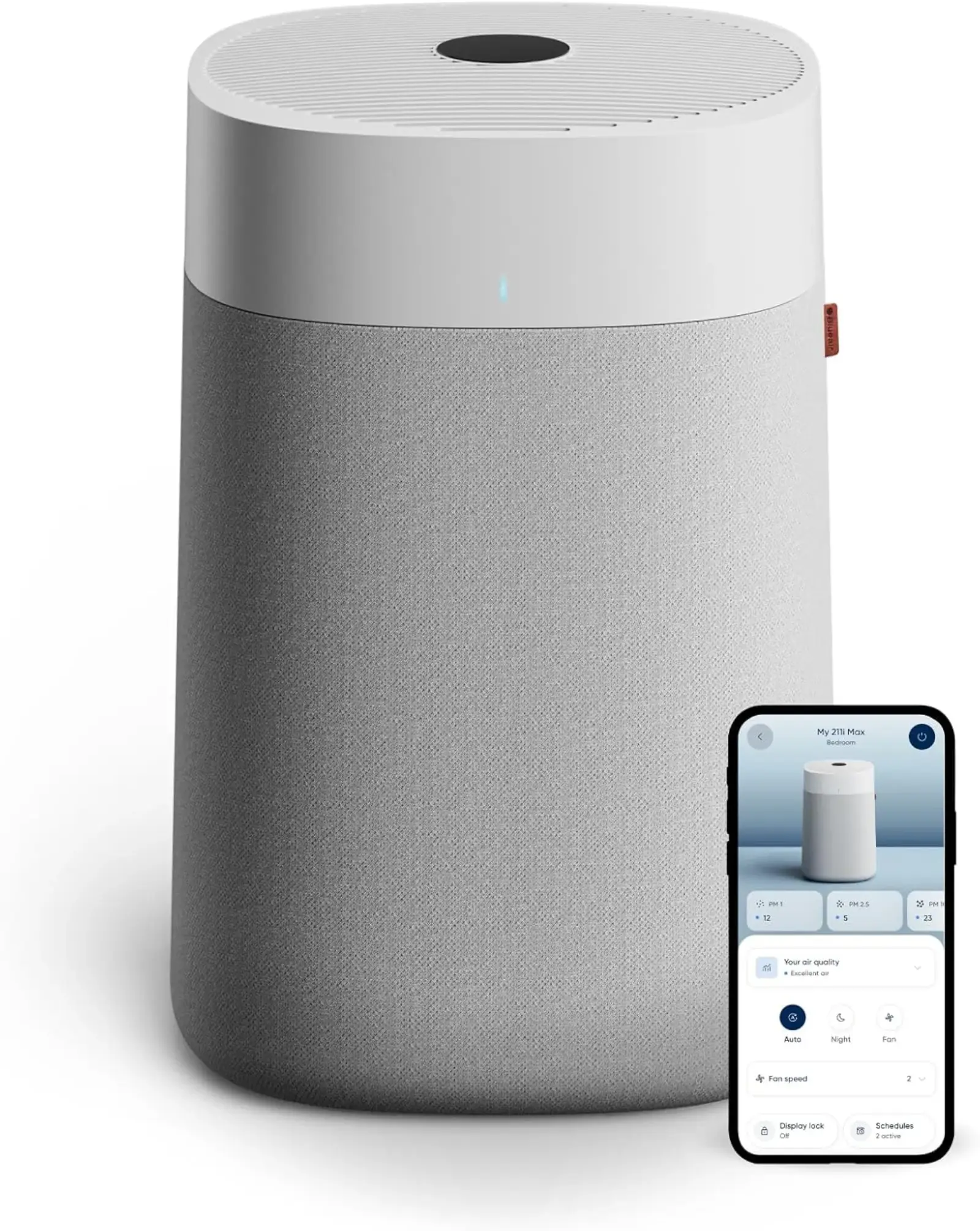
HEPASilent dual-filtration for rooms up to 550 sq ft. Run during and after cleanup to reduce airborne particles. Captures 99.97% of particles 0.1 microns and larger.

EPA-registered disinfectant cleaner. CDC recommends a 1:10 bleach-water solution for surfaces contaminated with rodent droppings, urine, or nesting material.
How the virus moves from rodents to humans, and the rare exceptions.
The dominant route is inhalation of aerosolised virus particles from rodent urine, droppings, or saliva. When contaminated dust is disturbed (sweeping, vacuuming, opening cabins or attics), the virus becomes airborne and can be inhaled. Less common routes include rodent bites and direct contact with broken skin. One species, Andes virus in South America, can also spread person-to-person in close-contact settings such as households or healthcare environments. Eating food contaminated by rodents is a theoretical but rarely documented route.
By breathing in dust contaminated with rodent excreta in spaces where infected mice or rats live or have lived. Common exposure scenarios include cleaning out cabins, attics, basements, sheds, barns, or vehicles that have been unused; handling firewood or stored grain; camping near rodent burrows; or working in agriculture and pest control without protection. For Andes virus specifically, close contact with an infected person can also transmit the virus.
Yes, in the limited sense that virus particles become airborne when contaminated dust is disturbed. Hantavirus does not spread through ordinary respiratory droplets like influenza or COVID-19, with the partial exception of Andes virus, where short-range respiratory transmission between people has been observed in close-contact settings. The dominant route is still inhaled dust from rodent excreta.
For almost all hantaviruses the answer is no. The documented exception is Andes virus, where person-to-person transmission has been confirmed in family clusters and healthcare settings in southern Argentina and Chile, and is now under active investigation in the 2026 MV Hondius cruise ship cluster. Sin Nombre, Puumala, Hantaan, Seoul, Dobrava, and other species are not known to spread between humans.
Only Andes virus has documented human-to-human transmission. The 2026 MV Hondius cluster, where confirmed Andes virus cases continued to appear weeks after the ship left port and far from any natural rodent reservoir, fits this pattern and is being investigated by WHO as a probable second well-documented chain of person-to-person spread.
Andes virus can. All other hantaviruses studied so far cannot. Healthcare workers caring for HPS or HFRS patients outside southern South America have not been documented as becoming infected from patient contact, but precautions for Andes virus cases include droplet and contact isolation as a precaution.
Only Andes virus, found in South America, has documented human-to-human transmission. While the rodent reservoir for Andes virus is geographically limited to the southern Andes region, infected travellers can carry the virus anywhere, as the 2026 MV Hondius cruise ship cluster demonstrates. All other hantavirus species are transmitted from rodents to humans only.
Each hantavirus species has a primary rodent reservoir: Sin Nombre virus is carried by the deer mouse (Peromyscus maniculatus) in North America. Andes virus is carried by the long-tailed pygmy rice rat (Oligoryzomys longicaudatus) in Argentina and Chile. Puumala virus is carried by the bank vole (Myodes glareolus) across Europe. Hantaan virus is carried by the striped field mouse (Apodemus agrarius) in East Asia. Seoul virus is carried by the Norway rat (Rattus norvegicus) worldwide.
Wild rodents are the main reservoir: deer mice, bank voles, Norway rats, field mice, and pygmy rice rats depending on region. Domestic dogs and cats are not reservoirs and do not transmit the virus to humans, though they can bring infected rodents into the home. Other small mammals like shrews and bats also carry hantavirus-like viruses, but their role in human disease is unclear.
Where hantavirus cases occur and what is happening right now.
On every inhabited continent. North America: scattered cases across rural and rural-urban interface areas, with Sin Nombre virus the dominant strain. South America: Argentina, Chile, Brazil, Bolivia, Paraguay, Uruguay, with Andes virus the main concern. Europe: Scandinavia, Germany, France, Belgium, the Balkans, Russia, with Puumala and Dobrava the main strains. Asia: China, Korea, Russia far east, with Hantaan and Seoul dominant. Seoul virus also occurs worldwide in port cities through Norway rats.
The MV Hondius, a 107-passenger expedition vessel that left Ushuaia, Argentina in late March 2026. WHO confirmed Andes virus in passengers and crew on 6 May 2026. As of the latest update, 8 cases and 3 deaths have been reported. The ship is currently anchored off Cape Verde awaiting disembarkation arrangements.
The MV Hondius. Built in 2019 as a polar expedition vessel, the ship was on a transatlantic repositioning voyage from Argentina to the Canary Islands when illness emerged among passengers and crew. WHO published initial Disease Outbreak News on 4 May 2026 and confirmed Andes virus on 6 May.
Yes. The MV Hondius cluster is the most prominent active investigation in 2026. Sporadic HPS cases continue in the Americas, and HFRS cases in Europe and Asia follow seasonal patterns linked to rodent population cycles. We track all official surveillance updates in our news feed.
In summer 2012, ten cases of HPS and three deaths were linked to insulated tent cabins in Curry Village, Yosemite National Park, USA. Deer mice had nested in the double-walled cabin construction, and visitors were exposed during normal occupancy. The cabins were dismantled and the National Park Service revised its rodent exclusion protocols.
In 1993, an unexplained respiratory illness killed several young, healthy people in the Four Corners region (Arizona, New Mexico, Colorado, Utah). CDC investigators identified a previously unknown virus, later named Sin Nombre virus. The outbreak was triggered by a population boom of deer mice following heavy rains and abundant pinyon nuts. This was the first recognised emergence of HPS.
How to avoid exposure and what to use when cleanup is unavoidable.
Prevention has three layers. First, exclusion: seal gaps larger than 6 mm with copper mesh, steel wool, or sealant. Second, sanitation: store food in rodent-proof containers, remove brush and woodpiles from near buildings, eliminate nesting material. Third, safe cleanup: never sweep or vacuum dry droppings, always wet down contaminated surfaces with disinfectant, wear an N95 or higher respirator and gloves.
For brief exposure during light cleanup, a NIOSH-certified N95 respirator (FFP2 in Europe) is the minimum guidance from CDC. For extended cleanup work or heavily contaminated spaces such as long-unused cabins or barns, an N100 (FFP3) respirator or a powered air-purifying respirator (PAPR) is recommended. Surgical masks and cloth face coverings do not protect against hantavirus aerosols.
CDC recommends a freshly prepared 1:10 dilution of household bleach (1 part bleach to 9 parts water) for surfaces contaminated with rodent excreta. Quaternary ammonium compounds and 70 percent ethanol or isopropanol also inactivate the virus. The contaminated area should remain wet for 5 minutes before wiping, and disposable rags should be sealed in a plastic bag with the cleanup waste.
1. Ventilate the space for at least 30 minutes before entering. 2. Wear an N95 or higher respirator, disposable gloves, and ideally a Tyvek-style coverall. 3. Spray droppings, urine stains, and nesting material with 1:10 bleach solution. 4. Let it sit 5 to 10 minutes. 5. Wipe up with paper towels or rags, never sweep or vacuum dry material. 6. Double-bag waste, seal, and dispose. 7. Mop the entire floor with disinfectant. 8. Wash hands thoroughly afterward and launder clothes in hot water.
For an attic that has shown rodent activity: N95 or N100 respirator, splash-resistant goggles or full-face respirator, disposable nitrile gloves over an inner cotton glove, Tyvek Type 5/6 coverall with hood, and disposable shoe covers. Disposable items should be removed in the order that minimises self-contamination and bagged on site before leaving the work area.
A standard vacuum cleaner is dangerous because it aerosolises particles. A true sealed HEPA vacuum can be used after the surface has been thoroughly wetted with disinfectant and the visible material removed, as a final step on hard floors. Vacuuming dry droppings is never recommended, even with a HEPA filter, because pre-filter pickup still releases dust.
N95 and N100 respirators, nitrile gloves, Tyvek coveralls, and disinfectants are widely available through hardware stores, safety supply retailers, and online marketplaces. We list specific items frequently referenced in CDC and ECDC cleanup guidance on our prevention guide with affiliate links to representative products.
How clinicians confirm hantavirus and what tests do or do not exist.
Two methods. Serology by ELISA detects IgM and IgG antibodies and is the most common confirmation tool. RT-PCR detects viral RNA in blood, serum, or tissue and is most useful in the first week of illness before antibodies develop. Both require a clinical laboratory and physician order. Patients should mention any rodent exposure when seeking testing, as it is not a routine screen.
No. There are no FDA-approved or CE-marked at-home rapid tests for hantavirus. Diagnosis requires a clinical laboratory using ELISA serology or RT-PCR. Anyone with concerning symptoms after rodent exposure should see a clinician rather than rely on online or non-medical test kits.
Hantavirus testing is performed at hospital laboratories, public health laboratories, and reference labs through physician referral. In the United States, state health departments coordinate with CDC for confirmatory testing. In Europe, national reference labs (Robert Koch Institute in Germany, Statens Serum Institut in Denmark, etc.) handle confirmation. The first contact should be a primary care physician or emergency department, who will order appropriate tests.
Specific testing: ELISA for hantavirus-specific IgM and IgG antibodies, plus RT-PCR for viral RNA. Supportive findings on a complete blood count include thrombocytopenia, elevated white blood cell count with immature granulocytes, and an elevated hematocrit in HPS. A comprehensive metabolic panel may show elevated creatinine in HFRS and elevated lactate dehydrogenase in HPS.
RT-PCR can return results in hours to a day depending on the lab. ELISA serology takes a similar time but may be negative very early in infection before antibodies develop. Confirmation by reference labs may take additional days. In severe cases, treatment is started on clinical suspicion before final confirmation.
What can be done after infection and what the outcomes look like.
There is no cure in the sense of a virus-eliminating drug. Recovery depends on supportive intensive care that keeps the patient alive while the immune system clears the virus. Patients who survive the critical phase generally recover, though some have persistent fatigue or reduced kidney function for months.
Yes, but treatment is supportive rather than antiviral. Standard intensive care for severe cases includes oxygen therapy, mechanical ventilation, careful fluid management, and in severe HPS, extracorporeal membrane oxygenation (ECMO). Ribavirin has shown some benefit in HFRS if started very early but is not effective in HPS. There is no specific approved antiviral for either syndrome.
No specific cure exists. Treatment relies on supportive care during the acute illness. Survival in HPS depends heavily on access to advanced critical care including ECMO. Survival in HFRS varies by virus species, with mild Puumala infections recovering with rest and fluid support, while severe Hantaan or Dobrava cases may require dialysis.
Inactivated vaccines against Hantaan virus are licensed and used in South Korea and parts of China. No hantavirus vaccine is approved in the United States, Europe, or most other regions. Several candidate vaccines are in clinical or preclinical development.
Yes. HPS in the Americas is fatal in around 38 percent of confirmed cases according to CDC. Severe HFRS from Hantaan or Dobrava virus has mortality up to 12 percent. Mild HFRS from Puumala virus is rarely fatal, with mortality below 1 percent. Early recognition and access to intensive care significantly improve survival.
For HPS, roughly 60 to 65 percent of confirmed cases survive when treated in modern intensive care. For HFRS, survival exceeds 95 percent overall, with Puumala infections close to 100 percent and severe Hantaan cases around 88 to 95 percent. Outcome depends on virus species, time to treatment, and access to advanced supportive care.
Identifying problem rodents and breaking the chain of exposure.
In North America the deer mouse (Peromyscus maniculatus) and the white-footed mouse (Peromyscus leucopus) are the main carriers. In South America, several species of rice rats. In Europe, the bank vole (Myodes glareolus) for Puumala and the yellow-necked mouse (Apodemus flavicollis) for Dobrava. Common house mice (Mus musculus) are not significant carriers in most regions.
No. Hantavirus is carried by specific rodent species in specific geographic ranges. The common house mouse found in urban environments is generally not a significant reservoir. The risk is associated with wild deer mice, voles, and field mice that enter buildings from surrounding natural habitat.
Seal all gaps larger than 6 mm using copper mesh, steel wool, or hardware cloth combined with sealant. Pay attention to where pipes and wires enter walls, foundation cracks, attic vents, and dryer vents. Trim vegetation back from buildings, store firewood at least 30 m away and 30 cm off the ground, and keep food in sealed metal or thick plastic containers. Remove sources of standing water.
Snap traps placed perpendicular to walls in active rodent paths are the most reliable indoor option. Bait stations with anticoagulants are effective outdoors but raise secondary poisoning concerns for predators. Glue traps cause prolonged suffering and are discouraged. Live traps are useful where lethal methods are unsuitable but require regular checking and humane release at distance.
For heavy infestations, repeated reinfestation, or properties with structural complications (crawl spaces, wall voids, multiple buildings), licensed pest control services typically resolve problems faster than DIY approaches. Look for operators experienced with rodent exclusion (sealing entry points), not only baiting. Some companies offer dedicated hantavirus or biohazard cleanup services for severely contaminated spaces.
Browse the eight pillar guides for deeper coverage of every topic, or check the news feed for the latest official surveillance updates.